
A research team led by Prof. WANG Kelin from the Institute of Subtropical Agriculture of the Chinese Academy of Sciences has uncovered microbial mechanisms that restrict phosphorus (P) cycling in farmland soils, revealing that high-intensity farming increases phosphorus limitation.
These findings, which are based on a regional-scale sampling in a karst region in southern China, were published in Agriculture, Ecosystems and Environment on January13.
A shortage of phosphorus in soil is a worldwide challenge for agriculture. Soil microbes play a key role in mobilizing this vital nutrient and making it available to crops. However, common farming activities may disrupt this delicate system. The impact of agricultural activities on these microbial communities and their ability to address phosphorus shortages remains poorly understood.
Along a gradient of low to high agricultural disturbance, the researchers studied four typical farmland types in the region's two main soils (calcareous and red soil): pasture, sugarcane farmland, rice paddy fields, and maize croplands.
They found that high-intensity farming, characterized by frequent tillage and greater inputs of fertilizers and pesticides, led to an increase in microbial genes associated with phosphorus starvation. At the same time, it reduced the abundance of key genes that help solubilize and transport phosphorus for crops.
In addition, alkaline calcareous soil naturally hosts a higher abundance and diversity of phosphorus-cycling microbes and their functional genes than acidic red soil does. This is largely because its near-neutral pH is more favorable for microbial activity.
In contrast, acidic red soils showed a strong coupling between microbial species diversity and functional diversity related to phosphorus cycling. However, in the more favorable calcareous soil, this link breaks down ("decouples"). Here, higher species diversity does not automatically mean greater functional diversity, showing that simply having more microbial species doesn't guarantee better phosphorus cycling.
"We found that high-intensity farming weakens the functional capacity of soil microbes that cycle phosphorus. This appears to be a core reason behind phosphorus limitation in agricultural soils," said Prof. ZHAO Jie, corresponding author of the study. "This insight provides a scientific basis for developing more sustainable strategies to manage this essential nutrient."
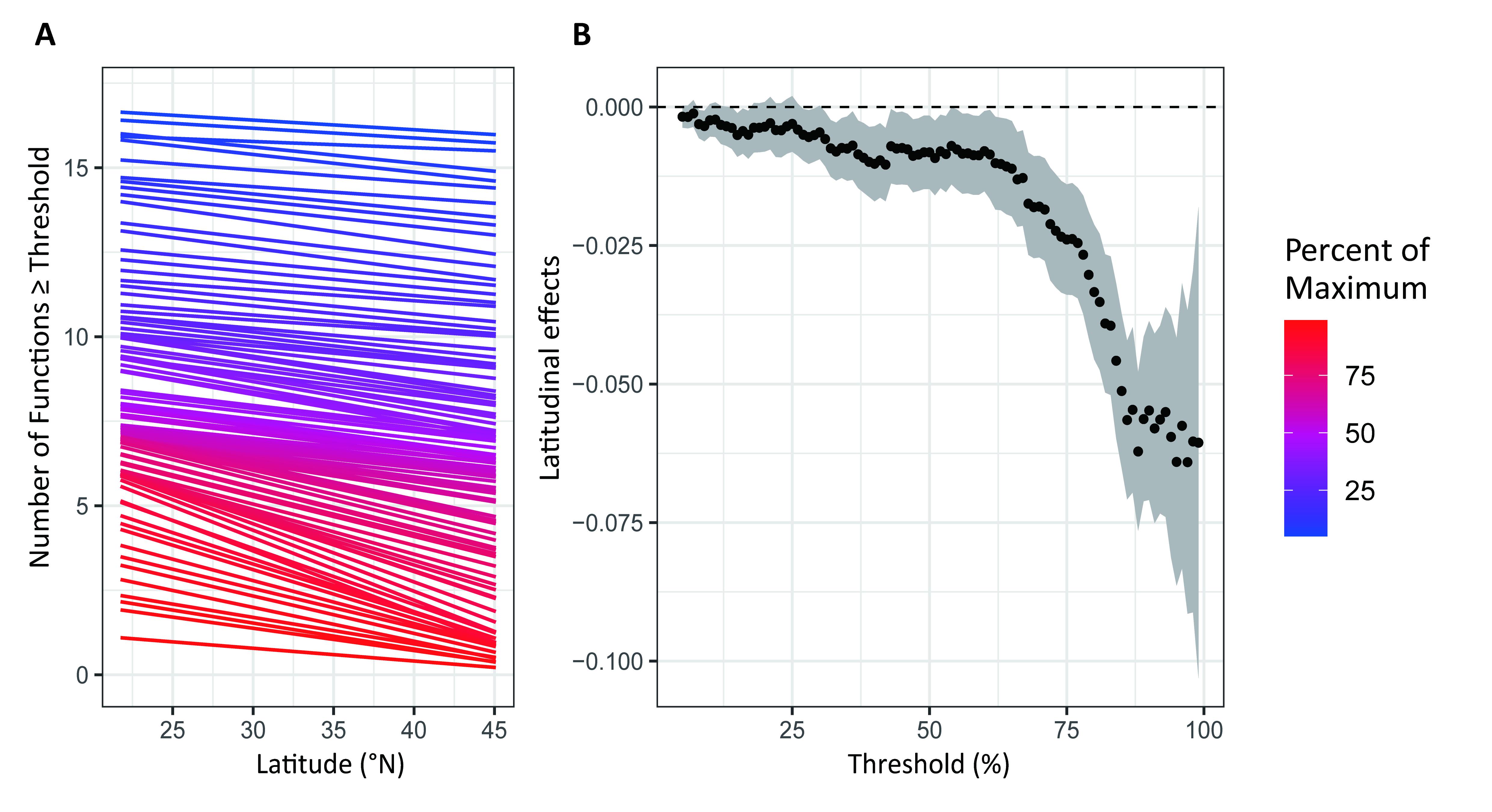
Researchers from the Wuhan Botanical Garden selected 30 higher-order rivers for soil, sediment, and water sampling along a latitudinal gradient in eastern China to calculate EMF using 18 variables related to nitrogen cycling, nutrient pool, plant productivity, and water q...
Researchers in the Institute of Subtropical Agriculture, Chinese Academy of Sciences (ISA) employ Geostatistics and Kriging interpolation methods to study the spatial patterns of shallow soil water content and its hydrogen isotope composition (δD value) and their influen...

86-10-68597521 (day)
86-10-68597289 (night)

52 Sanlihe Rd., Xicheng District,
Beijing, China (100864)
Copyright © 2002 - Chinese Academy of Sciences


